
In June, the Oakland Firesafe Council (OFSC) completed the final project funded through our 2026 PG&E Fuel Reduction Grant. The grant supported targeted vegetation management and structural wildfire mitigation across eight high-priority residential properties in the Oakland Hills’ Very High Fire Hazard Severity Zone.
We are grateful to PG&E for making this work possible. Projects focused on reducing hazardous fuels, removing invasive vegetation, improving defensible space, and protecting homes and evacuation routes. The work also provided opportunities for homeowners and neighborhoods to learn more about long-term wildfire risk reduction and stewardship.
As with the previous year’s PG&E grant, crews emphasized the preservation of native vegetation where appropriate, including redwoods, buckeyes, live oaks, sycamores, and cedars, while removing invasive species and hazardous or dead vegetation. Treatments improved vertical and horizontal spacing between fuels on the properties.
All awarded projects were located within established Firewise USA® communities or neighborhoods working toward recognition. Firewise communities have organized leadership teams, developed action plans, and committed to ongoing wildfire preparedness and risk reduction.
Shaded Fuel Break / Fuel Reduction on Hillsides and Slopes
Seasonal grasses and fast-growing vegetation pose a recurring threat during fire season, particularly on sloped lots where fine fuels can accelerate fire spread uphill.
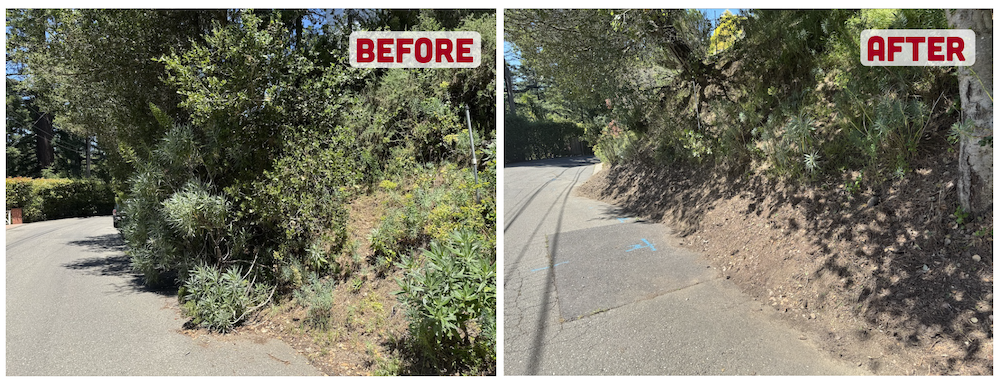
Preventative work on this hillside property included weed management and removal of non-native invasive species such as Scotch broom; removal of dead branches of toyon and cotoneaster; raising up bay trees to 8’ above ground; removal of dead, downed trees. All of this contributes to broader neighborhood resilience by interrupting potential surface fire pathways and reducing ignition risk along the residential corridor characterized by narrow streets.
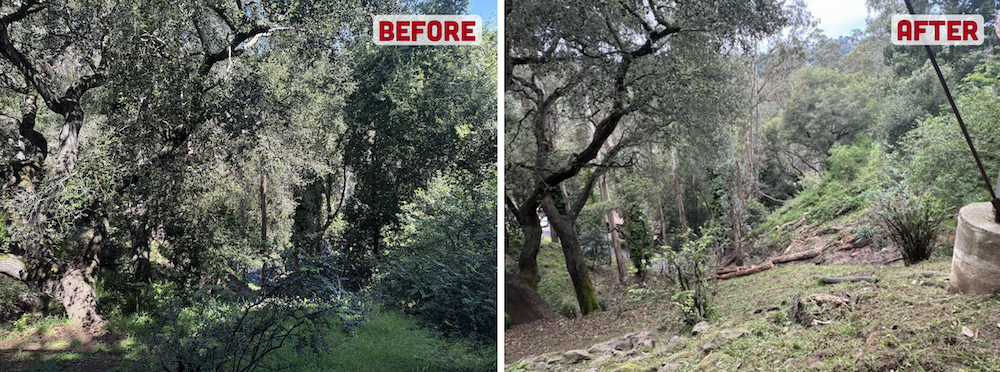
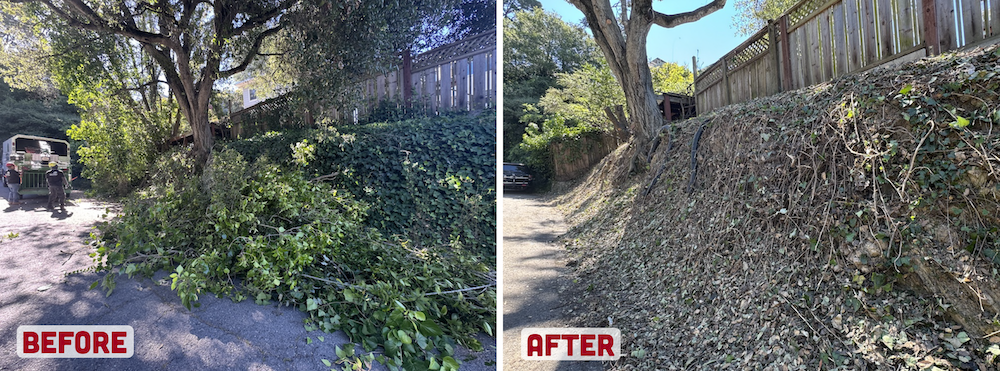
This narrow, steep swale sits between two homes and had become a collection point for fallen material, creating a concentrated vertical fuel bed that could act as a fire ladder in the event of ignition. If left untreated, this high-risk condition could significantly increase vulnerability for both neighboring structures. Mitigation work included removal of a large amount of accumulated pine debris, tree branches and brush; selective tree trimming and removal; limbing up of remaining trees to 8’ above ground.
Evacuation Route Clearing / Roadside Fuel Reduction
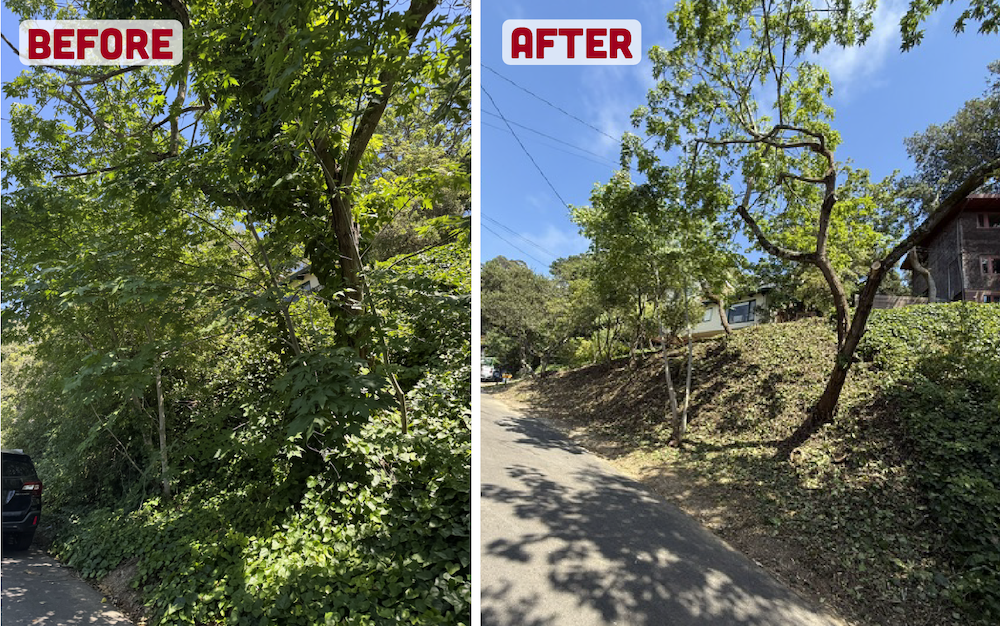
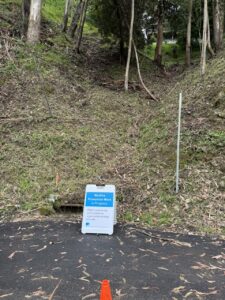
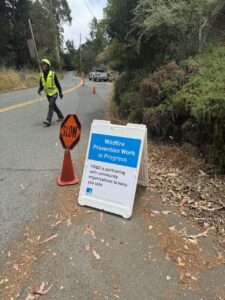
Risk reduction is crucial on narrow streets where tight spacing and overgrowth could compromise evacuation and fire response. These two sites concentrated on trimming back/reducing trees and clearing overgrown vegetation.
Defensible Space / Fuel Reduction / Structural Protection in the Wildland Urban Interface (WUI)
This property backs directly onto Joaquin Miller Park and several large trees, including a Monterey pine affected by pitch canker, were overhanging the fenceline and reaching toward the rear of the home. A recent incident in which a large pine branch fell and damaged the roof and gutters underscored the immediate hazard that the diseased trees posed. Work included removing the pine; thinning, and selective removal of hazardous black acacia to reduce canopy encroachment and restore defensible space.
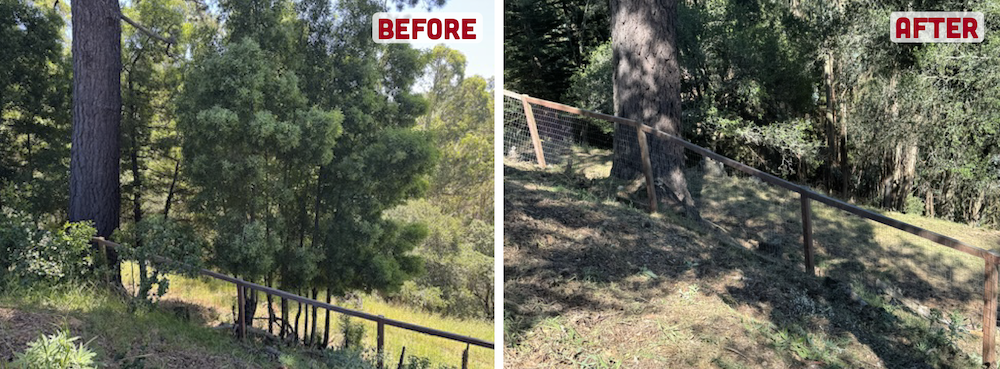
Vegetation management along the lower edge of a private parcel that sits above the West Trail, a well-used path within Joaquin Miller Park, included removal of several invasive black acacia, weed whacking the sloped area below grass, reducing/limbing up bay trees, and removing wood, brush, and debris. Targeting fuels at the slope break between public wildland and private structure creates defensible space and strengthens the buffer between a high-risk ignition zone and the built environment.
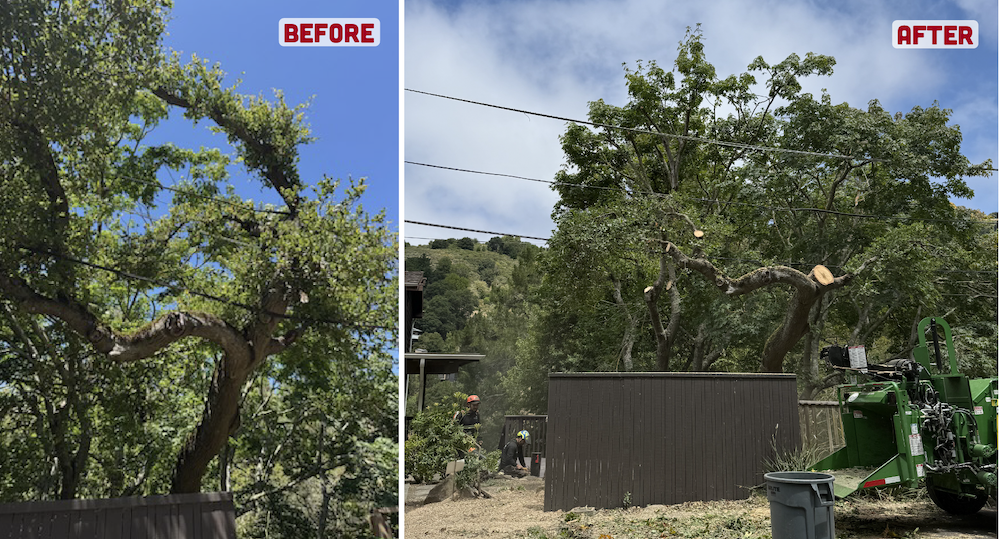
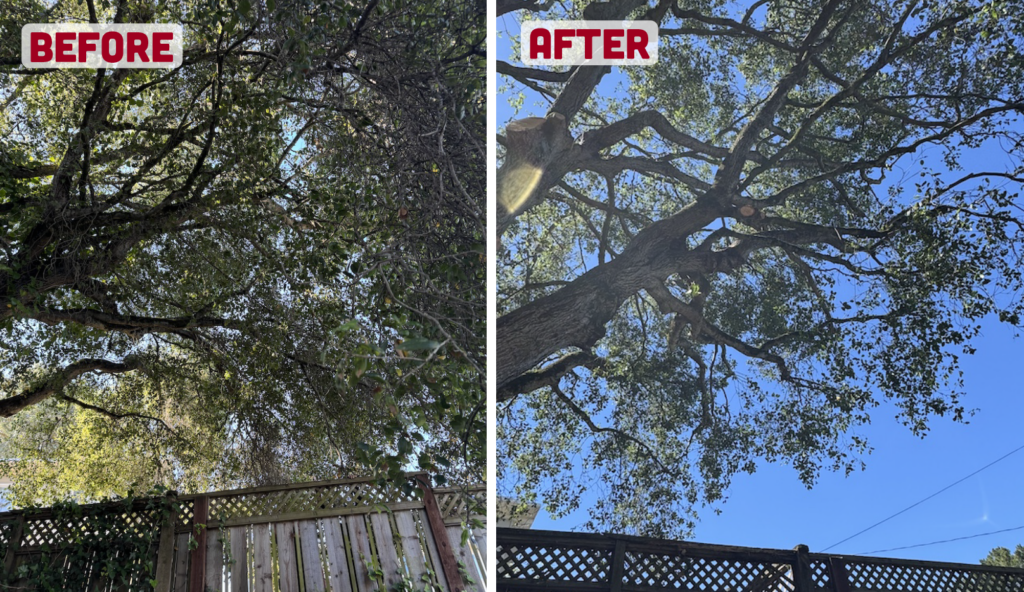
This residential property borders Garber Park, an area known for steep terrain and dense vegetation – encroaching tree growth increased the risk of fire transmission from open space to structure. Completed work reduced canopy density and removed low-hanging limbs, lowering the chance of ember ignition and improving vertical separation between fuels. Additionally a large oak tree limb impinging on lower utility lines was removed. Overall this project enhances defensible space and contributes to the buffer zone between wildland interface and residential development in this hillside community.
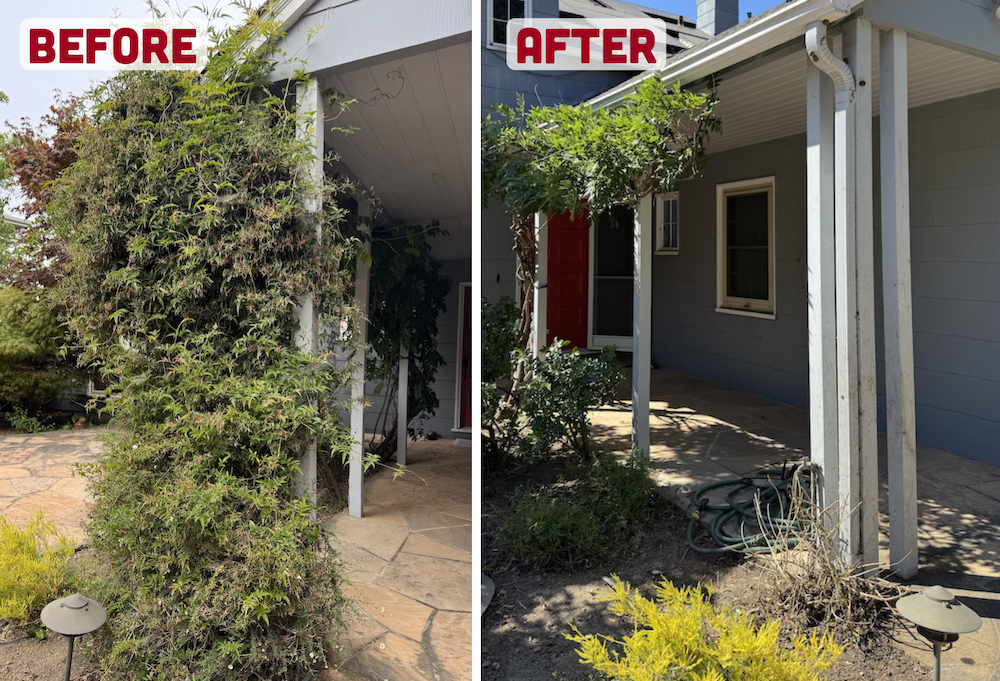
Defensible space improvement on a residential parcel directly across from Joaquin Miller Park addressed ember exposure and radiant heat concerns in the immediate zone surrounding the home (Zone 0). Treatment included reducing/limbing back of large blue cedar in front yard overhanging house and growing into utility lines, reducing jasmine and wisteria growing on front of house, limbing up bay and oaks in backyard, removing ivy suffocating cedar in backyard, removing overgrown salvia, clearing vegetation on slope with weed whacker, removing downed branches/debris from yard. The work enhances fire resilience and supports structural protection in a neighborhood characterized by dense canopy cover, limited clearance, and close proximity to Joaquin Miller Park.
227 Cubic Yards of Fuel Removed
Intensive fuel reduction efforts resulted in an estimated 227 cubic yards of vegetation and other fuel removed across the projects.
Because many of the properties were on steep slopes, crews prioritized low-impact, manual vegetation management where possible. Hand-clearing allowed crews to remove hazardous fuels while leaving root systems intact to help maintain soil stability and reduce erosion concerns.
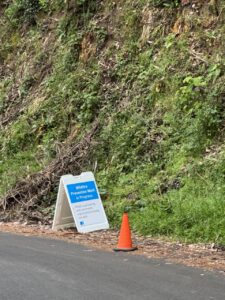
A high-capacity wood chipper was used to process large volumes of biomass on-site, reducing fuel loads and the need to transport material from the properties. Green waste was also repurposed through Richmond’s Green Waste Recycle Yard..
A Homeowner’s Perspective
One participating homeowner, who experienced the 1991 Oakland Hills Firestorm, shared: “As someone who was here during the 1991 Oakland Firestorm, I can tell you that I learned a lot during this process – most important is that this program can reduce our fire risk and save lives and property if we all do our part.”
The projects resulted in improved property safety, increased emergency access, and reduced fuel hazards around homes and neighboring properties. Homeowner feedback was overwhelmingly positive, with several neighbors asking about opportunities to participate in future fuel-reduction projects.
These projects demonstrate how targeted vegetation management, homeowner participation, and community-wide preparedness can work together to reduce wildfire risk in the Oakland Hills.