
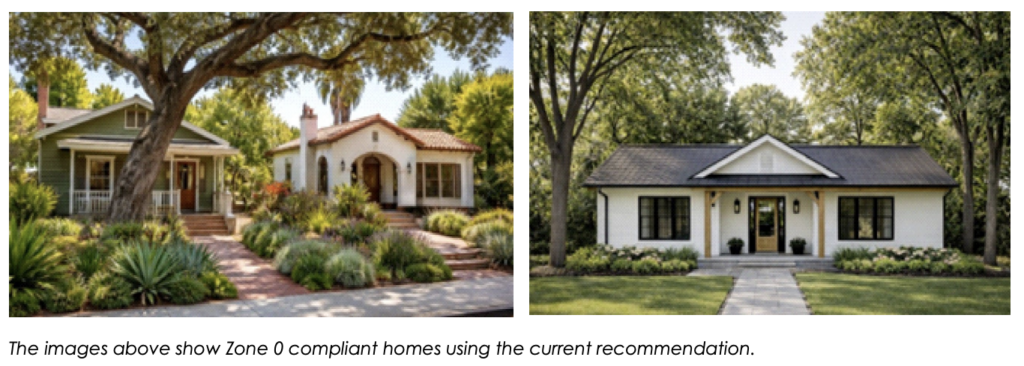
On August 19th, the California Board of Forestry and Fire Prevention (Cal Fire) approved Zone Zero rules that were substantially the same as the April draft, after edits and definitions that were provided in June. It formally went to the Office of Administrative Law and they opened a five-day public comment period that closed on September 2nd. Since there had been more public input for this issue than there had been for any other Cal Fire rule plead, it’s unlikely that this will cause much delay since virtually every comment had been heard and considered multiple times. While the Office of Administrative Law will have to assess legality of the regulations, adoption is possible by September 10th and it’s highly likely that it will be finalized by the end of the month with few changes. Once finalized, it will apply immediately for all new construction. In Local Responsibility Areas (jurisdictions that have their own fire services), there will be a need for local adoption, either the Cal Fire rules or ones that are stricter.
- Summary of the press release
- Short explainer video outlining the process and what the regulation requires
SO, WHAT DOES THIS MEAN FOR OAKLAND?
What is Zone 0?
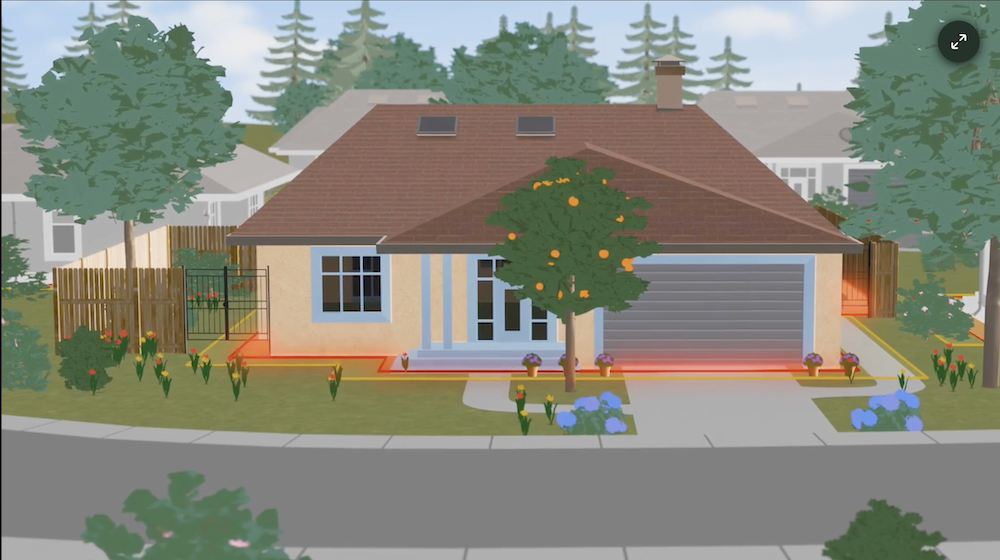
Zone 0 is an area of defensible space within the first five feet of a home or structure. It does not include the home or structure with attached decks and garage. This 0-5 ft zone around the perimeter of the home is considered the most important area to keep clear of combustible items to reduce the risk of a structure igniting during an ember-driven wildfire. The majority of structure loss from wildfires is due to flying embers that can travel miles ahead of an active wildfire, accumulate around the base of the structure, and ignite combustible items on or directly adjacent to a structure. Here is a summary of the current regulations.
Who will need to follow the Zone 0 regulations in Oakland?
Residents in the WUI will have from three to five years to comply with the basic requirements of the law from the date of adoption by the State (likely end of this September):
- The City Council of Oakland has established that the Oakland Wildland Urban Interface (WUI) is a very high fire severity zone. Residents in the Oakland WUI will be subject to the requirements of the new Zone 0 Cal Fire regulations as they are adopted by the City of Oakland. The City of Oakland may decide to adopt the regulations as they stand or adopt similar practices that afford the same level of safety.
- Residents in the Oakland WUI are currently subject to Wildfire Vegetation Management inspections by the Oakland Fire Department. The Oakland Fire Department will update its program of inspections to include Zone 0 requirements in its annual inspections going forward, initially on an educational basis until full compliance is required.
- To see if your address is within the Oakland WUI, follow this link:
City of Oakland – Wildland-Urban Interface Fire Area – Address Lookup Tool
When will Oakland WUI residents need to follow the law?
- PHASE 1 (Implemented within the first 3 years): Includes removing combustible items such as firewood, dead leaves and branches, mulch, and wood chips within 5 feet of the structure. Removing dead and dying plants, trimming trees away from roofs and under eaves, and implementing or adjusting for allowable vegetation during this time period. Current law requires that combustible debris on roofs and rain gutters, dead tree branches, and branches within 10 feet of chimneys must be removed upon the effective date of the new regulations.
- PHASE 2 (Implemented within 5 years): Local jurisdictions will assign a timeline, within 5 years of the effective date of the regulations, for the creation of an under-eave safety zone for vegetation other than existing trees, replacing combustible gates, and making any necessary adjustments to sheds and fencing.
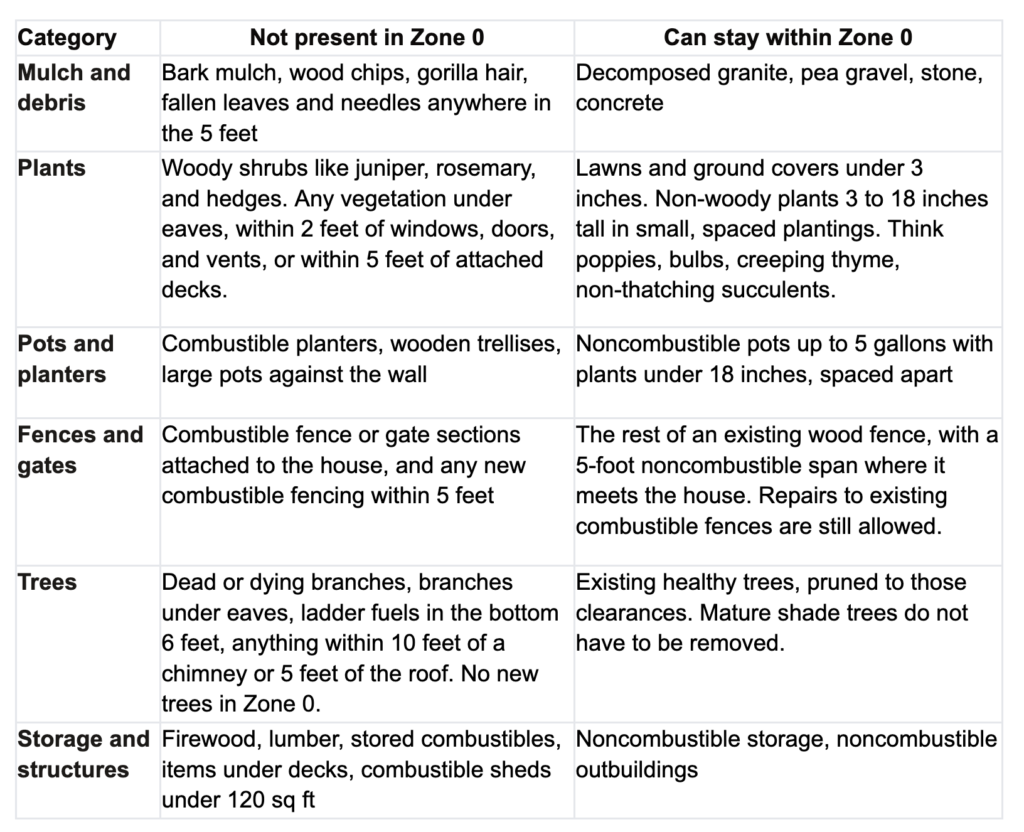
Examples of things that will need to go and things that can stay:
- Additional information and FAQS from CAL FIRE here